Showing posts with label hard-of-hearing. Show all posts

Wednesday, July 23, 2008

Philly Day Two at the Zoo!


Day Two in Philadelphia there was nothing planned until the Welcome Party at 7pm. Lorne would be flying in around 4-ish and Robyn wanted to see the zoo. She had never seen American animals in real life, she said. Which ones, I asked? She wanted to see a raccoon, which made me smile. I've got a family of raccoons living right in my yard. I actually don't like them very much because they aren't nice to cats. She also wanted to see squirrels, snakes and bears. I have ALL these in my yard. Bears do not come into my yard often, but I have had one. She had to say 'bears' three times then spell it because I couldn't understand what she meant with her accent. It looked like she was saying bees when I read her lips. The New Zealand 'r' is very soft. I couldn't believe they didn't have bees in NZ. HAHA! They DO! Of course!

We got up early, then went to breakfast in the hotel. It turned out Michael, Paul and RuthAnn also wanted to come with us to the zoo, which was fine with us-- the more, the merrier!

Robyn planned on bringing her marmite to breakfast so us Americans could try it, but she forgot. I was SO relieved. It stunk! OH! Before I forget. We became extremely upset with the breakfast service. They had a buffet but several of the board members didn't want that much to eat, so ordered a light breakfast instead-- Robyn included. After an hour and a half, they started throwing down their napkins and getting really pissed off. Nothing came. I got down to breakfast late. I was not hungry because I was still full from Robyn's pineapple lumps the night before. They're SOOOOOOOO good. So anyway, I went up to the desk, and complained about the slowness of their service. My breakfast order was taken and served within minutes. The rest got theirs too. We had tons of problems with the hotel staff throughout. More about that later. None of us ate breakfast at the hotel again until the final breakfast buffet where they went all out to please us, but our silver and plates were not well cleaned. Two people at my table sent their service back. Mine was OK.

Back to the zoo--those of you who know Robyn know she's into photography in a big way, and she takes beautiful pictures. I urge you to go to her blog if you haven't. Photography was the whole point of hitting the zoo. I should mention here, it was the oldest zoo in the country. It opened in 1874. It's a very, very small zoo-- but I sorta liked it because the animals were close and the buildings were old and beautiful. In the Seattle zoo, all the animals have much more space which means they often wander far away from the viewing area. This is better for the animals I know, but I kinda liked being able to see them up close in Philadelphia.


Anyway-- it was hot out and they had confiscated my sunscreen at the airport-- so Paul and I bought some there. It was really cool cuz the bottle has a little metal ring you can attach to a belt loop or your tote so you won't lose it. I LOVED this idea! So did Paul! Now we have matching sunscreens!


We got separated several times at the zoo, so we all exchanged phone numbers and texted each other all the time. Somehow the first time I texted Paul to see where he was, he sent back the word, "just." ARGGHH! Later, when Paul and I couldn't find Robyn, she sent back the word "just" too. This has become a joke -- or maybe it's a secret code I've never figured out.

I should add here Philly is very easy to get around without a car. They have these tourist buses that will drive you to all the fun places tourists like to go. You don't have to worry about navigating a strange city by bus because it goes in a constant circle. If you miss your stop you'll end up there again in no time. Our zoo driver became upset and stressed out when he ended up driving behind a horse drawn carriage traveling on the wrong street. Then he became upset again when another tour bus parked in his spot. I was happy to be riding in the bus instead of driving.

It didn't take long to go thru the zoo. Robyn and Michael decided to do some more exploring. I went back to the hotel with RuthAnn and Paul. On our way back, we ran into some more SWC members going out for lunch, so we tagged along, ending up at a little coffee shop/deli. There I had the worst lunch ever-- though it initially sounded good. A sandwich with roasted eggplant, spinach and white cheese that had no flavor at all. The spinach wasn't sauteed or anything, so it was also tasteless,but it would have been fine if the cheese had some flavor. It was AWFUL! But I ate it up anyway.

Then it was time to go back. Several people by now knew about my stupid mistake with the flight arrangements, and they let me know Lorne got in OK-- ALONE. I hoped he wasn't upset with me. It was time to shower and get ready for the Welcome Party.


I had a blast meeting up with several people I had not seen in over a year. Some of them spoke ASL and I was happy I understood. I let one woman try out my pocket talker cuz she had never seen one. Robyn had brought some wine from New Zealand and was handing out samples. I talked to several others there-- One of the BOD members had some special fortune cookies made up with fortunes that said things like, "If you talk to my back, expect to pay." HAHA! Lorne showed up and assured me he was not mad. I felt better after that. We all had to move downstairs into the bar after 10 so the other hotel patrons could get some sleep. I should not post pics of people without their permissions, so I disguised them all with Photbucket tools. I LOVE Photobucket tools! I took the picture of the flamingoes above too, then turned them into a painting!

I miss Robyn. She's still texting me from CA, telling me where all she's going. Today while at my Weight Watchers meeting she let me know she was eating ice cream on the beach. . .PFFFT.

Saturday, July 19, 2008

Piece of Pie?


Something of an epiphany occurred while I was gone. Think about this. At the IFHOH (International Federation of Hard of Hearing People) Congress, people gathered from all over the world to discuss issues that impact ALL deaf, hard-of-hearing and Deaf people worldwide. It didn't matter whether we spoke, signed, were late-deafened, wore hearing aids, cochlear implants, or not. . . All were accepted and all communication modes accommodated. Some of us wore FM induction loops--smart-links or pocket-talkers, some had FM capability programmed into their implants, some used interpreters, some used computer assisted real-time (CART), some used plain old pen and paper to communicate.

Right after that conference, I went to another convention for a small group of HH/deaf/Deaf people--the Say What Club. Again, signers mixed with oralists. All workshops and ceremonies had an interpreter, CART, and looped rooms so everyone could understand. At parties, people used their FM systems, wrote on tablets, signed--some in different languages. All felt welcome and respected.

Being around all that positive energy was rejuvenating. I really needed that.

So -- My epiphany. The deaf/HH community is united and getting stronger by the day. The majority of us agree on issues of inclusion and access. It's a great big world out there, and I'm just so damn happy to be a part of it.

Tuesday, July 15, 2008

International Federation of Hard of Hearing Congress 2008-- Part 1


This is just a quick recap of the IFHOH. (International Federation of Hard of Hearing) Congress in Vancouver, BC.

Since I hate driving in Vancouver, and didn't want to mess with long lines over the border crossing during TWO Independence Day holidays, I took the train. The IFHOH began a day after Canadian Independence Day and ended a day after US Independence Day. The train proved to be a perfect choice for my commute, as I enjoyed a relaxing ride sipping coffee while watching scenic beach views stream past the snack bar window. I had programmed my MP3 with soft rock and bought new noise reduction headphones just for this. Eventually the gentle swaying of the train along with warm coffee in my belly put me to sleep, and before long I had arrived at the train station in downtown Vancouver.

Two interesting things happened on my journey. First, I told the porter I couldn't hear well as I boarded the train. He smiled and made a concerted effort to talk directly to my face. For emphasis he pointed in hand gestures when indicating the way to my seat and where to put my suit case. He also clearly explained where the dining care and rest rooms were, again pointing while facing me to make sure I understood. I am not new to train travel and didn't need all the attention, but I appreciated his courtesy. Second, as I went through customs, I had to tell a border guard I couldn't hear well when she began grilling me on why I was visiting. Like the porter, she looked directly at me, enunciated clearly and talked slowly, then she actually SIGNED "thank you" as I walked away. That made my day. I had the feeling train staff and customs had been put on notice many deaf and hard-of-hearing would be traveling north from the states.

Canadian friend Lorne waited on the other side of customs to greet me when I walked through the gate. He grabbed my bag and off we went to the beautiful Wall Center in downtown Vancouver for registration. Unfortunately I didn't take pictures at the Convention, other than those of Kate with HER camera, who will be writing up her experience for a magazine-- but this picture was taken a week later at the SWC Philly Con where he attended, again with me. We took a quick lunch before returning to the train station to pick up Kate and Ann, who also came by train. While they settled in, Lorne and I hit the wine and cheese welcome party. We had hoped there would be enough food to call it a dinner, but we barely managed a few small slices of cheese before the food ran out. The room was crowded with people from all over the world. Later at opening ceremonies we learned over 27 different countries were represented. It was the largest recorded gathering of deaf/HH in Canada's history. People spoke in other languages and signed everywhere.

The opening ceremonies had CART in English (the official language of IFHOH) on three large screens. With the room filled to capacity, I ended up standing in the back straining to see. CHHA went all out welcoming everyone. They even had one CART devoted to Japanese, (or maybe Chinese-- I was never sure which.) Representatives from all 27 countries were called up, each waving their respective flags. Then the ceremony ended with a native drum march of Canada's "First Peoples." Hearing loss and deafness isn't confined to one nation or one race. We are a nation unto ourselves. During the next four days I would come to feel a bond with people from all over the globe as we examined each other's technological gadgets, and shared our concerns, hopes and dreams for a barrier-free world.

After the ceremony we rushed out to browse the vendor booths brimming with freebies. One woman from Sweden demonstrated a computer program she had developed for teaching lip-reading skills. While I found the concept fascinating, I already lip read quite well and wasn't interested in spending $110.00 on it-- though it was a very good piece of software and would be helpful to someone who has trouble lip-reading. Another booth featured little balls that you put on the feet of chairs called "hush-ups". They looked exactly like blue tennis balls, and Lorne joked he had a basket of old tennis balls somewhere he could put to better use. Many other booths were devoted to hearing aids, loops, phone systems, alarms and alerting devices, hearing dogs, medical ID bracelets, and basically anything you can think of relating to hearing loss.

We rushed through the exhibits as it became more crowded and noisy. I felt like I was on noise overload. We grabbed a cup of coffee and headed down to the beach within walking distance of the hotel. Noting the many coffee shops along the way, I made the remark that Vancouver is just like Seattle only full of Canadians. At the beach we walked around a bit more, socialized with other deaf/hh people and finally drove back to his house-- where I stayed. Lorne's wife Joanne and their little puppy, Hunter, greeted us at the door. Next, their earless cat, Tux, wandered into the room to see all the commotion. We went to bed early in order to get up for the Plenary Session next day.

Stay tuned for Day Two!

Tuesday, March 25, 2008

DING! DONG! The Witch is Deaf!


Last week I blogged a little about my frustrations with bus drivers failing to notify me visually when we were about to approach my bus stop. If you missed that, I'll recap a little. I always tell bus drivers I'm "deaf "or "very, very hard-of-hearing" when I board. They always assure me they will let me know when my stop is approaching, then they don't. I had been dreading this bus ride to the neurologist ever since I made the appointment last month. Thought I would update you.


Several of you suggested writing a note, and I thought that was a great idea. I'm not really all that bus savvy because I don't ride the bus on a regular basis. Except for the opera and other special events, I avoid Seattle whenever possible, and usually someone else drives. BUT-- I had to write down all the stops, route numbers, streets, transfers, and alternative schedules on a piece of paper anyway. So I flashed this at the bus driver when boarding, while announcing I was deaf, or "practically deaf" at the same time.


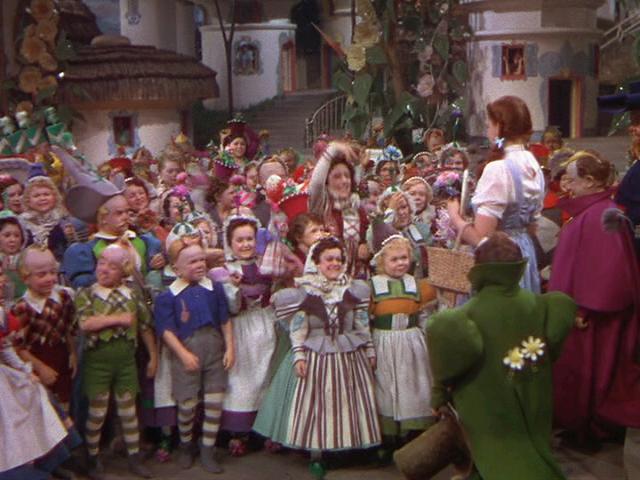
Using the modifier 'practically' in front of the word 'deaf' helps hearing people to understand why I can speak even though I'm deaf. It's like saying, "I'm not really Deaf, I'm just merely deaf." A song from the Wizard of Oz, "Ding Dong the Witch is Dead" plays in the back of my mind whenever I utter these words -- the line the coroner sings when he pronounces the wicked witch deceased,


"As Coroner I must aver, I thoroughly examined her. And she is not just merely deaf, she's really most sincerely deaf!"


Then the Munchkins chime in with their chorus-- "Ding dong the witch is dead! Lalalalala- lalala- lalala lalalalala-la-LA!LA!" This is really true! That's how my mind works.


So I rode on the bus to the Emerald City with Oz songs playing in my head. Did y'all know that's Seattle's nickname? Emerald City!


I knew where I was getting off the first time. The second driver was great. He simply said it would be the second stop after we got downtown, so I didn't need anything further from him. The third bus driver said he would tell me when it was my stop, but it turned out to be a long drive and I began to get nervous after a time. I asked a woman next to me to let me know when my stop was coming up, then she had to get off. As more and more people got up to leave, I was able to move forward. Finally I found a seat close enough to the bus driver to see his lips. When he got to my stop, I saw him announce it. I was just getting my stuff together when he turned, pointed, and nodded at me. I was surprised he didn't forget. The ride back went about the same with me telling the drivers, pointing to my list of routes and streets, and trying to sit in a spot where I could read the drivers' lips. One time a passenger over heard me tell the driver I was practically deaf. When we got into the right part of town, he told me my stop was coming up before the driver announced it. So all went well.

NOW-- the OTHER thing I wanted to mention. . . I don't know if this happens to many of you, but whenever I see a new doctor he or she always wants to know about my idiopathic hearing loss of course. It seems whatever is wrong with me, they feel it might somehow be related to my loss of hearing. There have been times I've been visiting the gynecologist and had to explain the hearing loss in great detail, as if that might have something to do with my vagina. It doesn't!! My hearing loss also has nothing to do with my teeth, eyes or moles that need to be removed. But it doesn't matter. Every doctor always wants to know all the fascinating details, and then I can see the gears turning. . . Next they wonder if my hearing loss has something to do with the other aches and pains in my body. When I explain I have had a progressive hearing loss since childhood, they want to know WHY. The appointment ends up being about my hearing loss and not the thing I went there for.

No one knows for sure WHY. This is not all that uncommon with hearing loss. That's why there's a name for it -- "idiopathic" -- which means the cause is unknown. I have been to several specialists over the years who have come up theories-- the most common being that it was caused by the measles when I was young. "Measles" is only a theory, not fact, because the hearing loss could have been caused by some other auto-immune disease, or maybe even drugs given to me when I was sick. No one knows. While I realize most lay people might find the concept of "unknown cause" unsettling, I should think a doctor would understand. Yet, time after time I find myself explaining to doctors how it is that I have a hearing loss of unknown causes.

And even STILL-- after all that -- the doctor wants to know who is currently "treating" my hearing loss NOW-- as if there's something to treat. How can an otolaryngologist "treat" a hearing loss if there's no known cause? Also, last I heard there was no treatment for permanent hearing loss. Most doctors must know that, right? So what is there to treat????


This whole line of questioning leaves me baffled, and it's another reason I hate to see new doctors. Last week's visit to the neurologist was no different. Because, as usual, I explained all that, then he looked at me askance repeating skeptically, "So! You have a hearing loss, but no one knows why?"


Me-- "That's right." (Oz tunes beginning again. . .Lalalalala- lalala- lalala lalalalala-la-LA!LA!)

I mentioned names of otolaryngologists I've seen in the past, and that seemed to satisfy for the time being, but honestly I haven't seen a doctor specifically about my hearing loss in quite awhile--except for the one who tested me for the cochlear hybrid last November and that was no more than an audiology exam and consult. He isn't "treating me."


Here are the lyrics to the song playing through my head on the bus ride--


Munchkins: Ding Dong! The Witch is dead. Which old Witch? The Wicked Witch!

Ding Dong! The Wicked Witch is dead.

Wake up - sleepy head, rub your eyes, get out of bed.

Wake up, the Wicked Witch is dead.
She's gone where the goblins go, Below - below - below.

Yo-ho, let's open up and sing and ring the bells out.

Ding Dong' the merry-oh, sing it high, sing it low. Let them know The Wicked Witch is dead!

Mayor: As Mayor of the Munchkin City, In the County of the Land of Oz, I welcome you most regally.

Barrister: But we've got to verify it legally, to see

Mayor: To see?

Barrister: If she

Mayor: If she?

Barrister: Is morally, ethic'lly

Father No.1: Spiritually, physically

Father No. 2: Positively, absolutely

Munchkins: Undeniably and reliably Dead

Coroner: As Coroner I must aver, I thoroughly examined her. And she's not only merely dead, she's really most sincerely dead.

Mayor: Then this is a day of Independence For all the Munchkins and their descendants

Barrister: If any.

Mayor: Yes, let the joyous news be spread The wicked Old Witch at last id dead!

Thursday, February 7, 2008

tunnel of deaf

Up in the Cascade mountains there is a bike path with a crumbling old two-mile tunnel called the Iron Horse Trail. Even on the most beautiful summer day, the tunnel is cold, dank and pitch-black. Once inside if you hold your hand in front of your face you can’t see it. After riding about the three-quarters of the way through, just when you lose all hope of ever seeing light again, a teeny bright pin-prick twinkles up ahead. As you ride towards it, blackness gives way to gray, the dimness of the tunnel fades, and soon you’re out in the warmth of daylight again. The views on the other side of the tunnel are glorious!! Much more magnificent than when you entered. Here, you’re on top of a mountain clearing looking out over miles and miles of the Cascade Range. Just you and the mountains. It seems like you‘ve gone through hell to get there.

Few people ever make that trip.

Many times I’ve thought of that Iron Horse Trail as a metaphor for my deaf journey. I haven’t been on it since my son was young enough to enjoy biking with me. The last time we were up there, we spent an afternoon riding down the mountainside with some friends, and it was one of those hot summer golden days of motherhood where everything seemed just right with the world. Before he became a rebellious teen. Before our friends were transferred across the country to Florida. Before my hearing took yet another nose-dive.

Late-deafness brings a lot of garbage and grief with it. Many of us spend years wandering around inside a dark tunnel. Few of us enter willingly. I say “few” because there actually are those who destroy their hearing on purpose, but that’s another story for another day. The rest of us end up in the deaf tunnel kicking and screaming. We’re never prepared. We don’t have flashlights or sweaters. We have no idea how we got there or what’s up ahead. We’re cut off from our daily activities, friends, and we feel lost. Trapped.

Eight years ago that’s where I was. And it was there, deep inside the “deaf” tunnel I made some of the best friends I’ve ever met through an on-line support group called the Say What Club. We leaned on each other for help until we made it out the other side. They taught me how to deal with my deafness, and eventually I was able to help others. I’m still learning. Life goes on and it’s good on this other side of the tunnel-- the deaf side.

These past few weeks I’ve been working on a blog so my deaf/ hard-of-hearing friends and I could share our late-deaf/hard-of-hearing experiences with others. I am hoping you will enjoy reading their entries and possibly learn something about late-deafness. Our hope at the Say What Club is to help those struggling with hearing loss. Those who are new to hearing loss or those just wanting some support. We hope to shed light on the everyday challenges people new to hearing loss face and maybe help with coping strategies so we all can get on with living full productive lives. We don’t have all the answers, but we listen. Please stop by.

Say What Club Blog

(Cascades by NateFish3000, Snoqualmie Tunnel above by Ray Fischer)

Saturday, December 29, 2007

A Question About Blackberries

Since a thief took my Sidekick, I will need to replace it. I might not get a Sidekick this time, so I am hoping for advice on what to get.

If you own a Blackberry, please let me know which type you have, what features you like, and also why you like these features. I would really appreciate this information.


Later, if enough of you respond, I'll publish a blog on what hard-of-hearing, deaf and Deaf people like the most, what is most popular, what features seem to be the most popular and so on--but only if enough of you respond.


Also when you respond-- if you could say whether you are hard-of-hearing, deaf, or Deaf and whether you talk with the phone, or only text, or use a loop or whatever. That makes a difference. If you don't want me to publish your response, just say so, and I won't.


Thanks!


Friday, December 21, 2007

Pajama Epiphany


I had an epiphany last night while sleeping. I must be kind of dim because for days I've been wondering what "deficit thinking" REALLY means. It seems I've read at least twenty-five different definitions by now and I wasn't getting it.

Earlier in the evening I had my Kundalini meditation session with Subhan-- which was was wild, but enlightening. Subhan says it all comes together when you reach three points: 1) self-awareness 2) self-acceptance and 3) relaxation.

I don't know about others, but I have the most problem with number two. I'm old enough to be aware of my strengths and weaknesses, and I can relax, but dang-- I still have such a hard time accepting my faults. In fact sometimes I even dwell on them, which can lead to self loathing.

Most the time I do not mind deafness. When I'm alone or with other deaf/HH people, it's no problem at all. But all those awkward times, like today when a lady, cursed, sighed, rolled her eyes and yelled at me because she had to repeat a question--that kind of event gets buried, then comes back as a headache, or keeps me awake at night. It hurts. It's not my fault.

On the one hand the reasonable side of me knows that woman had a problem. On the other hand, because I was working, I had to smile and remain calm and be nice to her. I would have liked to ask her if she thought I purposely developed a hearing loss specifically to annoy her at the library. I mean-- my God if she thinks SHE has it rough having to repeat three times, how does she think I feel having to ask for repeats?!?!?!?

So self-acceptance can be a hard one. Last night I worked on that while meditating and I guess it must have been rolling around in my mind while I was sleeping because suddenly I woke up in the middle of the night with the answer.

Deficit thinking is when you don't accept yourself as a deaf or Deaf person. (I'm applying this to d/Deafness, but I think it can apply to anyone.) It's when you don't accept yourself. When you don't fully accept yourself, and I mean LOVE yourself because that's what self-acceptance is, then you cannot accept others for who THEY are. In order to fully love others, you must accept yourself with all your own flaws, so you can look past other people's flaws.

In order to accept others, to be open to new ideas, technology, culturally different people, we must first become comfortable with who WE are. I hope we can all help each other become comfortable.


(top photo from flickr chicagokristi, side photo-petersblog.org/images/self-love.jpg)

Friday, October 12, 2007

Communication Barriers


Last Wednesday marked my fourth day in ASL class and I was pleased with my test score of 99 out of 100. This wasn't a huge surprise because much of the vocabulary was a review since I've already taken courses at the Hearing Speech and Deafness Cntr. and have spent lots of time conversing with a couple deaf friends. I was worried that I had lost some vocabulary since I haven't seen them lately, but it's quickly coming back.

The great thing about my college course is my deaf teacher is spending more time on ASL grammar and convention than my previous instructor did. She's moving quickly and I've already picked up many new words including the ASL names for all the local cities around here. Up til now I've only known Seattle, the town where my daughter goes to school, and a few towns in my vicinity. My teacher is absolutely wonderful! She's a natural mime. She has a great sense of humor and it's a perfect class for me in that we aren't allowed to talk, so it's a real visual experience which is the best way for me to learn ASL as a late-deafened person. One concern I previously had about taking college courses was that so many of them are geared towards interpreters.

Because we don't use our voices in class, I go into "no voice" mode and had not talked once until last Wednesday. Occasionally she does ask for people in the class to interpret what she's signing. It's clear she expects class participation and so--last Wednesday she asked (by pointing) for someone to make up a sentence and for someone else to "interpret." Pretty much the entire class had spoken up at some point. I knew she expected me to particpate. There came a time when no one knew the answer but me. As I've explained in the past, when I'm in ASL mode I really enjoy NOT talking, and I take my hearing aids off in class, so I'm kicking back just enjoying ASL and deafness. At that point when she kept asking if anyone knew the answer, I struggled with this because I knew the answer and no one else did. Very hesitantly I raised my hand and spoke aloud-- for the first time.

Then she signed "again" until I repeated my answer three times. She has never done this to anyone else. I always sit right up front. She's hard-of-hearing/deaf-- I'm not sure which. I don't know if I wasn't speaking loudly enough or if she was having trouble reading my lips, but I was embarrassed. I've become self-conscious of my speech because people have said it has changed and have asked about my "accent." Then when she made me repeat the answer over and over and over I wondered if she didn't understand me because I was talking weird, and if everyone else in the class thought I had weird speech. Finally she signed my interpretation was correct and moved on. She has sort of a teasing way about her, so I'm pretty sure she wasn't doing it to be mean. But it was awkward for me and I'm not sure if I will speak again for the rest of the quarter when she asks someone to "interpret." And I can't talk to her about it because we're only allowed to sign with her. Do I need to reframe my perspective? This is way too complicated to for me to discuss with her partly because I might be over-reacting, and partly because I don't have the ASL vocabulary to clearly express my feelings or concerns about the possibility that my speech might be deteriorating along with my hearing. How convoluted is that?? I mean. . . the irony of it-- I'm in ASL to learn how to talk with my hands and feeling awkward about my voice.


Picture above taken by Wanderlust http://flickr.com/photos/phoebewanders/

Tuesday, October 2, 2007

Menieres Hell


Today I awoke to a familiar sound-- my husband puking in the toilet. Retching must fall in the 250 hertz range on an audiogram because I can hear it perfectly without hearing aids. 250 hertz is my only normal score. Sometimes I wonder if God preserved just this one frequency so I would always know when he was having a Menieres attack. I'm deaf to most of his speech.

I got out of bed. "Can I get you anything?" I already knew his answer would be no, but he often needs something. He only says no because he wants to be left alone. Our usual routine is I suggest things until he angrily waves me away because I feel so helpless knowing how miserable he is and not being able to do anything. Somehow it doesn't seem right to go about my usual business ignoring him, which is exactly what he wants me to do.

"How about a pillow or blanket?" This is code for 'Are you almost done throwing up?' I don't want to ask outright if he's done, because it's sort of negative. The throwing up phase can last hours and hours. His longest attack so far lasted about eight hours. Though that's not exactly correct, because I'm only talking about the throwing up part of it. People think when I say he had an attack that lasted eight hours, it means eight hours of flu-like symptoms. No, it's not like that.
It's eight hours of throwing up with head in the toilet. What I mean is he cannot move his head away from the toilet for eight long hours. He feels he's going to fly off the edge of the earth if he moves his head or legs or any part of his body. That's vertigo. Your world spins out of control as if you're on a hellish ride at an amusement park. It lasts hours and hours and hours until he collapses. If he weren't so strong he would collapse earlier, and I would need to call 911 so he could be taken to an emergency room, but so far we've been able to avoid that spectacle. Afterwards, he needs to sleep and can have days and days of not feeling 'right' in the head.

Talking makes him throw up. This morning I couln't hear his response to my question about the pillow and blanket because his head was in the toilet and I needed to see his lips.

"Can you sign?" I asked. Sound came from the toilet but no sign from his hands. I assumed he wanted to be left alone and found a quilt to put over his back and shoulders. That's all I could do.

Last Friday he had an attack on his way to work and hadn't shown up by 1pm. Everyone was out searching for him. I took two hours off work to drive his route just in case he had pulled off the road somewhere, and was in need of help. My imagination ran wild with thoughts that maybe he flipped his car due a sudden drop attack. I've heard nightmare stories of this happening. The other worry that kept running through my mind were the similarities between initial onset of a Menieres attack and initial heart attack. What if he thought it was Meneires and pulled off the road, but had a massive heart attack instead? I didn't find him and was frantic by the time I got back to work. Luckily when I arrived a message was waiting that he'd been found in the parking garage of his office. He had been missing for six hours. He had his cell phone, but wasn't thinking clearly, so turned it off and didn't call anyone to let them know where he was.

He's in a deep sleep now. Later today I'll pump him with liquids and he'll bounce back quickly because he's so fit and basically in great health. When he isn't sick he works out two hours a day.

Menieres disease also causes hearing loss. I've told this story to many friends. He is one reason I am sure of God-- but I won't debate religion with anyone. The first time we met, I shook his hand and I got a message he was THE ONE. It was weird because we met at work. He didn't ask me out for months, but I knew the entire time he was going to be my future husband. I even told my mom. It wasn't like I was into him or anything. I didn't know him well enough to be that into him. That's how strange it was.


All these years he has been so patient while I've been losing my hearing. I've heard the complaints from other late-deafened friends-- husbands who wouldn't allow TV captioning, or wouldn't repeat more than twice, and couldn't handle all the hearing loss issues. My husband has been so great about it. NOW he's losing his hearing, and I'm in a position to help him through this. I can't help thinking it was meant to be. US-- I mean. Not the hearing loss. He doesn't deserve this hell.

Sunday, September 30, 2007

Great Deaf Talent-- Regina Olson Hughes

So today I’m reading my book called Great Deaf Americans and once again I’m inspired by what so many were able to achieve. Their intelligence, creativity, bravery, and diligence were awesome. It’s so hard to pick just one person to highlight each week.

One point that struck me while reading other deaf blogs this past week however was the negativity surrounding oralism. Deaf people who use “hearing behaviors” or who speak occasionally instead of always communicating in ASL may be accused of not acting deaf by their peers—and this is NOT a compliment.. Read this blog. As someone who is late-deafened I almost always use my voice, though I’m learning ASL. I feel far removed from this oralism debate and can’t comment to the deaf perspective.

But as someone who is neither fully hearing or culturally deaf I will say this-- I do not believe all deaf people can learn to speak or lipread. It is wrong for the hearing to force such high expectations on the deaf. Over the years, the ability to speak among the deaf has wrongly been associated with intelligence level in some cases, which has hurt many highly intelligent deaf people. I want to be clear that the ability to speak and lipread is only related to one’s hearing ability and nothing more. Simply stated, some deaf people hear more than other deaf people. Some are born deaf, while others become deaf during childhood or later, after learning to speak. All of these factors taken into consideration can lead to greater advantages when learning to lipread and speak and also reading and writing abilities.

For example it is a known fact young children benefit from playing language games and being read to long before they begin reading themselves. Early language skills are the foundational building blocks of reading and writing skills. Children who are born deaf are not exposed to English language as young children. If a person becomes deaf after age five, naturally he or she will be at a greater advantage for learning to read, even though he or she did not learn to read before deafness because the language building blocks were put in place.

Then again, the deaf develop other language building blocks related to ASL. No one has ever studied this to my knowledge, but I wouldn’t be surprised to learn that IQ testing is skewed for the deaf simply because they think and process information differently. My guess is they are all much smarter than we know. Psychologists already understand IQ testing is not as much of a science as it is an art. We’re continually discovering new information about the brain—new ways of measuring intelligence and new types of intelligences. I suspect ASL expands intelligence in ways we have not measured yet. The deaf see our world differently and we would be wise to make the most of their gifts.

Instead we have tried to force them to be oral like square pegs into round holes. This has led to backlash among the deaf —a sort of reverse discrimination where everything “hearing” may be perceived as against deaf culture.

There was a simpler time long ago when deaf people could be oral or non-oral, and there was no rift in the deaf community. It didn’t matter. You simply did what you had to do to get ahead.

Regina Olson Hughes was one such person. She was born in 1895 and died in 1993. Always interested in drawing from the time she was a young child her parents had her tutored privately in art. At age ten she became sick with Scarlet Fever and began losing her hearing. (Another source said a doctor poured oil into her ears when she was a child.) It’s hard to know what caused her progressive hearing loss to start. She was deaf by the time she turned fourteen.

Then she went to Gallaudet for her Bachelor’s and a Masters in art. (Later, because of all her accomplishments she was given and honorary doctorate degree.) Incredibly she was able to speak four languages by lipreading: French, Spanish, Portuguese and Italian. Most the time she lipread if it wasn’t too important to understand, but if she needed to be sure of details she had people write the words out on paper.

Eventually she took on a job for the State Department as a translator. Then later she worked for the Department of Agriculture as a scientific illustrator. She also took on another job with the Smithsonian’s Department of Botany painting plants. Today her work can be found in plant manuals, on pesticide labels, and in dictionaries, as well as museums and cards.

Thursday, September 27, 2007

Say What??


So today I showed up for my djembe lesson, and my instructor greeted me with, "Hi! You can go ahead and use the bathroom first before we start-- if you don't mind."
I didn't need to go to the bathroom. I am fifty years old. I think I know when I need to use the bathroom! My drum lesson is only a half-hour long! This was strange for him to insist I use the bathroom! Firmly, but politely I responded, "No thank-you, I already went before I came." (not that it's any of your damned business I thought to myself)
His eyebrows furrowed and there was a looong pause before he said, ". . .NO. . .I need to use the bathroom. . .IF you don't mind?"
"Oh." I said sheepishly, then started laughing like a crazy woman when it hit me how funny the whole misunderstanding was. I was still laughing when he came back from the bathroom. I'm quite sure he thinks I'm a nut.

Wednesday, September 26, 2007

That Doggone Sound


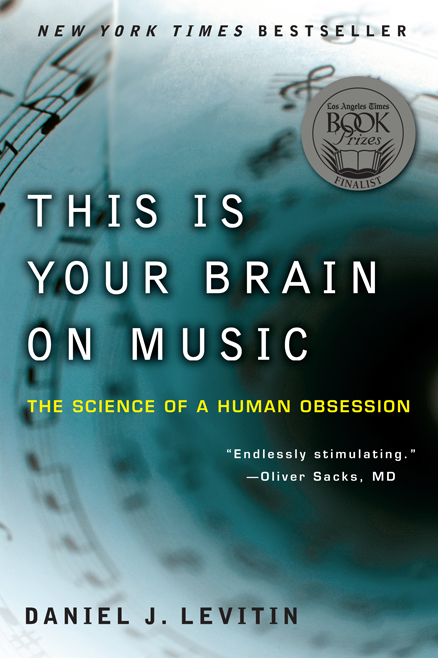
In the book This Is Your Brain On Music, author Daniel J. Levitin brought up an intriguing philosophical line of thought. He said the flavor vanilla doesn't exist in a bowl of pudding until your tongue touches it.

Then he went on to elaborate about light. Darkness doesn't exist. It's simply the absence of light, which only exists when we perceive it with our eyes.

Finally he got around to sound. It only exists when we hear it. Dogs and whales hear things we don't hear. We hear things other animals don't hear. Sound waves can't be seen or touched. They're invisible. Sound simply wouldn't exist for us at all if we had no mechanism to perceive it.


You see where I'm going with this. Sound is defined only by what we hear. Definitions are agreed upon by most humans. Normal hearing is defined by what the majority of humans hear, not what dogs or whales hear. Humans are deaf to sounds dogs and whales hear. However, those sounds still exist for a dog or whale. If deafness were defined by dogs, humans would be considered deaf. Does this not mean all humans are "deaf" to some degree?

What is a disability? It's all relative.

Later, Levitin explained it is not only what we hear but how we process what we hear that impacts our hearing perception, as well. Not all of us process what we hear the same way. What I hear is different from what other humans hear, and how I process it is different depending on the experiences I associate with certain sounds, and my genetic make-up and a lot of other technical biological considerations. This is why different people prefer different kinds of music, different voices, different rhythms, and so on.

The book is a fascinating, but highly technical look at how the brain processes sound and gave me lots to think about.


Monday, September 24, 2007

Did You Know. . . ???


Thomas Edison was nearly deaf? Some sources say he inherited a progressive hearing loss from his father, while others say it was possibly caused by scarlet fever when he was 14. He himself often claimed he had been "boxed" in the ears while riding a train. He heard a pop and lost his hearing after that. It's hard to say what caused his hearing loss, but he was totally deaf in one ear and 80% deaf in the other.


Sept. 24- 30 is Deaf Awareness Week. This came out of the The World Federation of the Deaf Congress, which met in July of this year. The idea is to educate the public about hh/deafness, its causes, the culture of deafness and the fact that the deaf/hh are highly capable, productive people who have contributed much to the world.

Sunday, September 23, 2007

Deaf Hero Day -- Cal Rodgers

Cal Rodgers was born Jan. 12, 1879 and died on Apr. 3, 1912. He became sick with Scarlet Fever when he was six years old and lost his hearing. His achievements were never listed in "deaf" records because he had very little connection to the deaf. However, a biographer Eileen Lebow wrote that he was "almost totally deaf." Additionally, Henry Kisor said that "records of the time say he understood less than half of what was said to him and that his own speech was hard to understand. . . .(While) he could have been classified as severely hard-of-hearing,. . . he experienced what we do, and I consider him one of us."

Rodgers was the first civilian to ever to own a Wright Bros. Flyer bi-plane, and the first to make a transcontinental flight. Of course it wasn't non-stop. Bi-planes weren't capable of that. He named his plane the Vin Fiz, and began his trip at Sheepshead Bay, Long Island, NY on 17 Sept 1911 just four months after getting his flying license. He landed nearly two months later at Pasadena, CA on Nov 5, 1911 after crossing over the Rocky Mountains.

Since the biplane had no navigational equipment he followed the railroads. His bi-plane was temperamental and needed daily repairs. He had no windshield and no protection from bad weather. His body was exposed to the cold and the elements at all times. The plane was blown about in swift gusts of wind. Made of wood, metal and wire, it was light and delicate, difficult to maneuver and unstable. He died flying just four months after his infamous transcontinental crossing when he lost control of his plane near Long Beach, California. Below is a picture of Cal Rodgers with his plane, the Vin Fiz.


Thursday, September 20, 2007

This Whole Stupid LipReading Thing

I'm late-deafened. I can read lips, and I do pretty well at it. But I want to clarify what this means exactly because there seems to be a lot of misconception out there about super beings and miraculous lip reading skills.

First of all, let me just say right here if you ever saw the show F.B. EYE with the deaf Deanne Bray, you need to understand this is a TV show. It's make-believe. Fiction. No one in the real world reads lips THAT well. You have to be able to hear a little bit to be able to lip read. The more you hear, the better you do. Many deaf people have some residual hearing that helps them with lip reading and that's why some can "get by" with it.

I still have some low tone hearing. I am deaf to most speech sounds, but I because I hear some speech sounds--specifically vowels-- I can "get by" with lip reading. Vowel sounds are almost always made in the back of the throat. They can't be seen on the lips. Try it. Say the vowel sounds to yourself--short and long. Chances are the only time you'll move your lips is when you say the long O and long U. Even then, a deaf person wouldn't know if you were making the O, OO, or OW sound just by looking at your lips. I am lucky because I can hear the difference since I still hear low tones. There are vowels in every word. This helps me a LOT.

In fact, 70% of all sounds in the English language cannot be seen on the lips because the sounds are made in the back of the throat. If a person hears nothing at all, that means they must guess at 70% of what can't be seen. Doesn't that seem like an awful lot of guessing to you? It sure does to me.

Even if you were able to guess those 70% of sounds you can't see, you would still have more guessing to do. Why? Because so many other sounds look exactly alike on the lips-- t and d, k and g, p and b, f and v, s and z. I cannot hear the differences of any of these sounds. I cannot hear these sounds at all. When I talk to people, I have to guess.

Since I grew up hearing English and losing my hearing bit by bit, I learned an association of sound with lips. I have some context to help put the sounds in the right places. I understand the rhythm of speech, especially those voices I've known a long time. I can guess what some people are going to say before they say it, and sometimes I guess what they have said just by the rhythm of the sound because I know them. The point is I'm guessing what people are saying. I'm NOT "reading their lips."

I can not imagine how difficult it would be for a deaf child to learn this skill with no previous exposure to the sounds and rhythm of speech.

Then-- there are other problems with lipreading.
1. The person has an accent so he or she doesn't pronounce his or her letters the way most English speakers do.
2. The person doesn't move his or her lips while speaking. Some are so shy they barely move their mouths at all when they speak. Other people are paralyzed and can't.
3. The person has a speech impediment.
4. The person is self-conscious of his or her mouth and covers it a lot.
5. The person has a hairy beard that covers the lips.
6. The person has some kind of distracting oral tick or fixation such as playing with a pierced tongue, or talking out of the side of his or her mouth.
7. The person chews gum or bites nails.
8. The person is missing many teeth and cannot pronounce words correctly
9. There is glare behind the person's head, making it difficult for you to see the lips.
10. It's too dark.
11. The person is distracted or shy and has a hard time facing you. Or simply won't!
12. There is background noise drowning out what little sound you hear, so you have to guess even more than 70% of the conversation.
(I probably haven't covered everything here so feel free to list a few of your own if you think of something.)

Let's face it. Lipreading is a fine TOOL, but it's not a great way to communicate. It requires way too much work. Knowing all these facts about lip reading makes shows like F. B. Eye upsetting to me mainly because it promotes unrealistic expectations of the deaf.

When my progressive hearing loss was first diagnosed my doctor encouraged me to learn to lip read, but it turned out I already knew how, because I had picked it up on my own as a kid. I was "assessed" as an expert lip reader-- meaning I could lip read those 30% of sounds that could be seen on the lips. However, the lip reading didn't help. I was stressed all the time trying to communicate with people. Can you imagine trying to guess what people were talking about 70% of the time? HLA (SHHH) also encourages lip reading by passing out little buttons to wear in public with they words, "Face me, I lip read." This is so wrong to do because, again I want to stress, it promotes the false assumption that lip-reading is a way to communicate.

Often I let people know I read lips, but I also tell them I'm learning ASL too. I wish someone (like HLA) had encouraged me to learn ASL earlier. I have talked to so many late-deafened people who feel disappointed in their inabilities to learn lip reading. They thought it would be easy, then found out how hard it was. They thought there was something wrong with them, rather than with the program!!

People who promote lip reading skills promote false hope for all hard-of-hearing, d-deaf, and D-deaf. They set us up for failure. It doesn't work! What we need-- the late-deafened especially- is more community outreach so we and our families can learn ASL.


Sunday, September 16, 2007

Deaf Hero Robert Weitbrecht

This past week my belly dancing instructor made the comment, "There's a fine line between erotic and exotic." In dancing, the difference is in how many inches apart you hold your feet while shimmying. Just a few inches can create a completely different look-- alluring and graceful or flaunting and brash.

The debate we've been having in here and on other blogs between "audism" and "deafism" got me thinking about the lines we draw between ourselves as deaf people. Medically speaking there's a fine line between a severe hearing loss and a profound hearing loss. There's a fine line between "hard-of-hearing" and "late-deafened" or "d-deaf." There's a fine line between oral deaf who were born without hearing and late-deafened who were born hearing, then lost most of their hearing. I know several oral "d-deaf" who hear better than me, who also sign better than me and speak well too. It seems to me they are the best off because they speak and sign so well. I envy them. I wish I were fluent in ASL, but I didn't grow up with a profound hearing loss. I am trying to learn.

Part of the reason I blog is to inform hearing people about deaf people. This is why I have Deaf Hero Day each week. Today's hero is deaf physicist, Robert H. Weitbrecht who invented the coupler for the TTY. Born deaf on April 11, 1920 in Orange, California, Weitbrecht was tutored in speechreading-- the prevailing method of deaf education at that time. He did not learn ASL until he was an adult. Because of his hard work, deaf people were able to communicate with each other by phone.


To read more about Weitbrecht, click on his name.

Tuesday, September 4, 2007

Second Class Citizen


This happened awhile ago, but I still laugh whenever I think about it. One time Meg and I went to a Thai place for lunch. (The picture above has nothing to do with this story, except that it's of a Thai waitress I got off the net.)


Meg had been mentoring me in ASL and our routine was to eat lunch in restaurants with our hearing aids removed. Because I needed the ASL practice, she normally did the oral speaking when the wait staff came around for our orders. I would point to my order. If the waitress had a question I couldn't lip read or she didn't face me, Meg would sign it to me and I would sign back. Thus, waiters and waitresses sometimes got the impression I was not oral.


I was not doing this to pull the wool over any one's eyes. I want to make it clear I wasn't asking for special favors or accommodations or even sympathy in these restaurants. My decision not to speak was purely motivated by the need for extra ASL practice. The more I could cram into our lunch sessions, the better. Also, I found it relaxing to be able to eat in restaurants without my hearing aids; to be able to communicate freely in ASL without having to worry about hearing. As a late-deafened person, I cannot begin to describe the excitement I felt by doing something as simple as going out to eat in a busy restaurant at lunchtime without the usual encumbrance of worrying about how I was going to HEAR the conversation.


So as usual-- when the waitress came around Meg ordered orally, and I pointed. The waitress had a question about my order and directed it to "oral" Meg, who signed to me, then I signed back, and Meg answered the waitress' questions for me. Soon our meal was brought around and we ate and signed happily for about an hour. Then, I became full and decided I might need a box to take the rest home. I signed, "FULL! Need box." Meg, who eats like a bird, also had a fully loaded plate of food. So Meg waved the waitress over and asked for our meals to be boxed up. Then we began signing about where we wanted to shop after the restaurant. . .


Next thing I know the waitress came over to the table and started boxing up my food, as if I were a child. This is new, I thought. Normally they just drop off the boxes and leave. I started to grab the spoon, but she kindly waved me off and indicated she wished to box it for me, so I let her. And sat there with an awkward stupid grin on my face. Meanwhile Meg waited and waited with her empty box-- thinking the waitress would offer the same service to her. After all, she had more food left on her plate than me. Next, the waitress closed the lid of my box carefully, placed it neatly into a plastic bag, then knotted it tightly -- all the while smiling in such a kind, benevolent way. Then she bowed slightly, turned on her heel and walked away, leaving Meg gaping over a humongous plateful of Thai food and an empty box.

Imagine Meg's surprise.


I signed that maybe the waitress thought she was more capable because she was the "oral" one. We shrugged it off and laughed. But I was honestly shocked. I never realized some people treated the deaf differently, like invalids. This was my first clear experience of audism. Though it wasn't altogether negative, I can only say that was because I tried to justify the waitress' actions by telling myself she meant well. If I really weren't oral, it probably would have hurt deeply that she had bagged my food as if I were a helpless five-year-old.

Wednesday, August 29, 2007

Carol?


For those of us who cannot hear, phone communication poses a huge challenge. When we are late-deafened, it is sometimes difficult for others to understand why we no longer use the phone. We used to use the phone. We still talk. Now suddenly we avoid the phone -- and it seems somewhat anti-social--especially in today's world when everyone else walks around with phones glued to their ears 24/7. Even my 80-year-old father can't grasp why I don't carry around a cell phone like everyone else. Well-- I do actually. I carry a Sidekick and I text people. (Don't tell him please. He hasn't learned how to text. )

A few days ago someone left a message on my phone because she needed to change my appointment. I can't hear phone messages and rarely use the phone unless I have two super loud 50db amplifiers plus my hearing aids with telecoil compatibility. Then I might briefly talk to family members or close friends --people whose voices I know, who also know me, so they know to shout into my ear. Occasionally it works. . . in a pinch. . . if the house is completely quiet. Nevertheless my considerate husband saved the voicemail message, so I could listen to it. HA!


Two nights ago he asked if I had listened to the voicemail yet. He's a bit fastidious about keeping the phone free of unnecessary messages piling up.


"I can't hear phone messages. Can you write it down on a post-it and leave it somewhere? I'll email instead." I said.


Yesterday morning I found a yellow post-it on the coffee-maker. He knows me so well.


Kim--Email Carol to change your appointment. --he wrote.


What appointment I wondered? Who is Carol? What is her email? Or her phone number even?


Last night, once again eager to delete superfluous phone messages, my husband asked, "Have you changed that appointment yet? Did you see my note? Can I erase this message now?"

"You didn't leave a number," I said.

"I thought you were going to email her," he accused.

"I would if I knew who she was. I have to call with IPrelay --and I don't have the number."

"Did you at least TRY listening to her message?"

"Fine! Gimme the phone!"

I listened. This is what I heard. --"Mwah Kim, mwis is mwah-mwah. bwah-bwah-mwah mwah, mwaaaaaahhh, mwah hahaha mwaa mway mwya meh ma." You get the idea. . .
"Can't hear her," I said.


He listened. "She's from the DVR." (Department of Vocational Rehabilitation)

Okay? I just have to ask. . . I had the appointment with the DVR because I am deaf. WHY would she call on the phone?? Do people not get this? To call a deaf person with a regular phone is sort of like expecting a blind person to read a fine print document. It's like asking someone who uses a walker to hike over a rocky trail. The purpose of the DVR is to help the disabled with accommodations they might need in their work environments. The DVR has my email. I have tried calling them with IP relay before. Huge hassle! Automated phone system with a long menu. Isn't it ironic that an office whose sole purpose of existence is to help the disabled with accommodations would be so unaccommodating?

I will try to email the woman I normally meet, (not "Carol" since she didn't leave an email address), and I hope nothing horrible has happened to her, and also that she gets my message.

Tuesday, August 28, 2007

Getting What You Want


Recently our local ALDA president asked me to write about my experience of trying to get accommodations for my son's high school graduation ceremony this past June. I thought I would include it in here as well. Many of us struggle through this process when we attend public events. In the same newsletter, another friend will be writing about how she tried to get accommodations when she was called for jury duty. Why is it the wheelchair ramps and braille on the doors and elevators are always in place, but the deaf have to make special requests?? Then we have to fight tooth and nail to get it. Here's my story--

I had been through the process of lining up accommodations for my kids' graduation ceremonies before. I knew I needed to start early. With that in mind I typed off my first email to one of the high school counselors in charge of the ceremonies named Sara in early April. Then I said a silent prayer that the other one, Dave, wouldn't be involved in arranging details for that portion of the night's events. I had dealt with him before.

When I didn't hear back for several weeks, I emailed again. If you have normal hearing you might be wondering why I didn't call. I do not hear very well. I might have used IP relay, but like every other business in America, the school has an automated answering system with a menu requiring a series of numbers to be systematically punched in before a human comes on the line. The relay operators can't punch the numbers for us, and by the time they tell us the selections on the menus, we make our choices, then tell the relay operators what numbers to punch in, the automatic machines automatically hang-up. It's a nightmare for deaf people-- but that's for another blog. Anyway, so I emailed the counselor a second time and received this prompt reply back.

(And yes!! These excerpts are from REAL emails I have saved on my computer, but the names have been changed.)

From Sara-

"Kim,
I forwarded your emails to Dave. You haven't heard from him?"


DRAT!! This is not good, I thought. Then I emailed Dave.

"Hi Dave,
I am deaf. I will need accommodations for the graduation ceremony on _____. I contacted Sara on _____, and she said she forwarded my requests to you. What I need is this:

http://www.ncdhh.ne.gov/brochures/cart_broch.pdf.
It's called Computer Assisted Real-Time Transcription, and basically requires hiring a transcriber, providing a screen and special equipment. The cost is normally about $125.000 and I can provide you with a list of transcribers in the Seattle area, but they need to be lined up soon. They provide their own equipment and screen. I am not fluent in ASL, as I'm late-deafened, so hiring an interpreter wouldn't be a good idea.


Please get back to me as soon as possible so we may make arrangements as I feel it's getting late."


From Dave--
Kim, I have been doing graduations for over 10 years for ___, andhave never been aware nor asked to look into either of these options. I have no idea who to turn to for this particular equipment.
I am not sure I will have the time to take care of this and I do not know who would take care of the costs. I am not aware of the person who provided you with (. . .the past accommodations) I will check with __________, ASB Activities Coordinator,on Monday . . .

DRAT--AND DOUBLE-DRAT!! I thought. He had done nothing!!! (ARGHHG!!) WHY did he wait so long? Why did he not find out who would pay at least? When was he going to tell me he wasn't planning to do anything? And WHY did he think the Associated Student Body should pay for my accommodations? What?! Were they supposed to hold a bake sale to pay for the CART and transcriber? Did the ASB have to pay for the wheelchair ramps too? Get real! I had to do some deep breathing and relaxation exercises before sending my next email.


My email to the principal--
Dear Ms. Principal,
My son will be graduating on June ___, and I am in need of accommodations for the ceremony as I am deaf. I emailed ______about this on _______ and haven't heard back. I will need preferential seating, and Computer Assisted Relay-Transcription(CART). I can provide you with a list of people who offer this service. . . . Please let me know what you plan to do to accommodate me for my son's graduation ceremony. If I don't hear back soon, within the week, I plan to contact the Office of Civil Rights to file a complaint against the school district.


Message from Ms Principal-
Hello Ms. _____I am now just reviewing my e-mails. I am sorry that Ms. ______ was not able to get back with you yet about your accommodation request. She is researching how to get what you have requested so she can have information when contacting you. . . . I also cc. Mr. ______. . . . Please know we are well aware of the right you have to have accommodations and the need to help you. That all being said, I personally want you to be able to enjoy this important moment for you son, _____. We will make sure your request is honored. . . Thanks for letting me know of your concern.


And I DID enjoy his graduation! We were seated as close to the stage as possible. I sat right next to the transcriber, who typed every word, even the announcements and the words to the songs were typed onto the screen too. It was fabulous!! The song lyrics were appropriate and moving. The student commencement speeches were sweet and funny and eloquent in the upbeat, informal, endearing way only eighteen-year-olds can be. I enjoyed it SO MUCH!! The school paid. Yahoo!


What I have learned is:
1) Start your requests early
2) Know what you want
3) Have information ready
4) Don't back down
5) Play hardball if you need to. You have nothing to lose. As my mother always said--"The squeaky wheel gets the oil."


I also want to point out my threat to file a complaint with the Office of Civil Rights was not a bluff. I have filed against the school district in the past, and would have done it again. I have a hunch Ms. Principal was well aware of this, even though it wasn't her school I filed against. Know your rights and do not make empty threats.

It is nice to follow up with a thank-you note afterwards, though not absolutely necessary since they are required by federal law to accommodate you, but it's still thoughtful and smooths things over after you've given them such a hard time making them jump through hoops and all. 8-)
By the way, none of the graduates pictured above are my son. Those are graduates of Florida State. I just thought it was a cute picture.

Sunday, August 26, 2007

Impaired?! (ARRGGHH!!)


Last night, my brother made the grievous error of calling me hearing-impaired. I didn't mean to jump down his throat, but I hate that term. I just HATE it. I don't feel "impaired" in any way. In fact I am healthier than he is. I can't hear well, but there are so many other things I CAN do. Many things I do better than hearing people. For example, I have a super-duper sense of smell. Also, some of my friends have pointed out that I'm more observant of visual details than the average person. I feel most deaf people learn to compensate for their hearing losses, and live relatively normal lives. I believe I have had a really GOOD life compared to most.

I am not magnificently talented, but I have a personality and interests outside my hearing loss. I'm an avid reader. I know a bit about butterflies and gardening. I love opera-- what little I hear of it-- but I love the stage and sets and costumes. I have raised three children, manage a home, dabble in ethnic cooking, and I've recently become a vegetarian. So I've been experimenting with vegetarian dishes lately. I am taking American Sign Language, learning how to belly-dance and how to play a West African drum called the djembe. I'm also in the process of redecorating my home since my youngest is going to move out soon. I'm planning two trips out of the country in the coming year too. That's why this blog is called LIFE and deaf. Deaf and hard-of-hearing people do all the same things everyone else does. We're not all about deafness. If you are deaf or hard-of-hearing, I'd love to hear what you're doing, what your hobbies are, and your talents. Please- drop a line. I want all those hearing people out there to stop thinking of us as being "impaired."


Today, and for the next few Sundays, I plan to dedicate my blogs to outstanding deaf and hard-of-hearing people who have achieved unusual success above and beyond the norm. Deaf heroes. My first choice is William "Dummy Hoy." ("Dummy is NOT a nice word to call the deaf today, but William Hoy was born in the 1860's when the word 'dumb' meant 'mute', not stupid. "Dumb" has since morphed into a more negative, ugly connotation for the deaf, and you could get punched in the nose for calling a deaf person that today.) William Hoy was the first deaf major league baseball player. Not only was he a great baseball player, but he also helped his team by inventing "secret baseball hand signals" still in use today. Many deaf people are very athletic and signing can be put to good use in a lot of sports! Many deep sea divers use it, for example. To read more about William Hoy go here William Hoy.