Showing posts with label hearing loss. Show all posts

Thursday, June 19, 2008

Shel asked, What was it like?

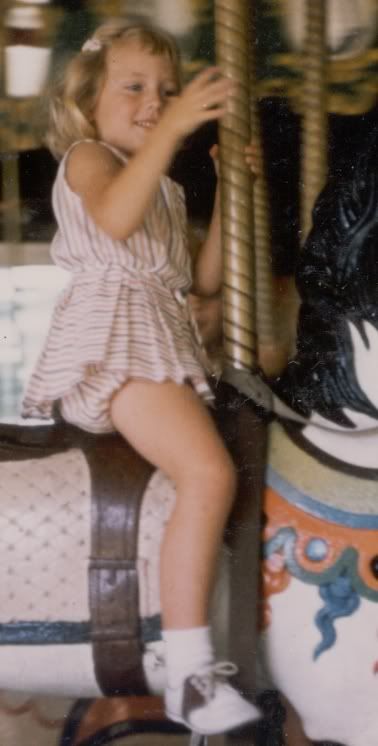
Me-- when I could hear well. (1961)


Shel wrote a nice comment in my post On the Fence, and asked about my childhood. I guess he wanted to gain a better understanding of what it feels like to be late-deafened.

You're right: I can never fully understand where you are coming from. You can also say you can never understand where I am coming from as I've chosen to own ASL as my mother tongue, and thereby my Deaf identity. It's a long story, dear. I do invite you to read my blog on growing up in a Hearing family at Shel: A Deaf Canadian's Thoughts. This is in response to Open Minded Deaf Observer's negative perspective of life in a Hearing family and life in general. He's entitled to his perspective, and so am I entitled to mine. (So are you to yours! :-)) There are some things you might not understand, but do please feel free to ask me. If you are willing, would you mind describing in depth that experience as a child in school and outside of school? I'd love to hear about it... "hear"... talk about puns!

I've been thinking how to answer this question--'what was my hearing childhood like?' First of all, I want to say I appreciate that you want to understand.

I grew up hearing. **shrug** I'm not sure what more you need to know about that. Do you wish for me to describe what hearing was like? I can't.

I have tried to think of different analogies that might help, but I've realized it's impossible. I've read comments from Deaf people who have said music means nothing to them, or that they wouldn't want to hear because the world is "noisy." I understand that, because when you wear hearing aids many sounds are unpleasant. However, hearing aids do not even come close to natural hearing.

There's a richness to sound you can't possibly understand unless you've heard it. Sound is rarely painful and not usually annoying to people with good hearing. The human ear is every bit as miraculous as the eye.

Of all sounds, music is sublime. There's good reason every culture all over the world celebrates with music. Did you know music probably came before speech? Almost all animals sing or chatter to attract mates. Humans are no different. Read Your Brain On Music for more information about how music and rhythm evolved. Anyway I'm not telling you this to make you feel bad. I just want to point out how significant sound is to most hearing people. I want you to appreciate how deeply rooted sound is in our human evolution and how connected it is to our emotions. I could tell you about sounds I used to love, but it would be like describing a beautiful sunset to a blind person who has never seen. There aren't words enough.

I don't mean to offend, but music can even enhance orgasm, which is why many hearing people use it to seduce a date, and play it while having sex. It's also evokes spiritual and transcendental experiences, which is why it is used to celebrate God.

Some hearing people love music more than others. I started playing the piano at age four-- the age I was in the picture above. I took ballet dancing, played flute in my school band from fifth-grade on and sang in my church and school choirs. I loved piano best. I haven't completely lost music, but I don't hear it the way I used to and that has left a big void.

Some Deaf people have said that I haven't accepted Deafhood if I don't love being deaf. To me, that's like a childless woman telling a mother who has lost her child that it's wonderful being childless. Once a parent, always a parent -- even after a child dies. There's no going back. It's the same with hearing. I can't go back and pretend I never heard.

So when Deaf people say that I need to move on, that I need to celebrate Deafhood, or that I need to choose which "side of the fence" to sit on-- hearing or deaf, I want to scream, "How DARE you!?" You can't possibly know what it means to become deaf unless you have heard. You've always been Deaf. (When I say 'you' I don't mean you personally Shel, I mean the 'anyone' you.)

I agree I can't possibly know what it's like to be you either.

Life is worth celebrating, whether Deaf, deaf or hearing. Deafhood is no more special than any other way of being. I'm celebrating my own life and my own personal journey, which happens to be neither hearing, nor deaf. I do not grieve the loss of hearing, but I sure do appreciate the meaning of what I've lost. There's no going back.

Smiles,
Kim


Wednesday, March 26, 2008

Deb Ann asked--

"By the way, why did the doctors say such things like that? Did they really graduate from college?"

I'm going to write about about my medical history in greater detail later, but I did want to give a short answer to this. From my experience few doctors know much about hearing loss. I think they must gloss over it in med school, because most doctors I've encountered seem only slightly better informed than lay people. General Practitioners and specialists other than ENT's might occasionally screen for hearing and make a diagnosis, but after that they send you to a specialist because hearing loss is over their heads.

Sometimes even ENT's know very little about hearing loss. For example the one I currently see for my sinuses specializes in sinus problems only, and has admitted he sends his patients with hearing loss elsewhere.

The only doctors I've met who seem to really understand hearing loss are otolaryngologists, which are ENT's who only see patients with hearing problems. Over the past 30 some years, I have seen four different otolaryngologists and three different ENTs in the Seattle area. The otolaryngologists all agree with my "idiopathic" diagnosis-- though they have thrown out several theories. After testing everything, they always attach a great deal of importance to my measles experience as a young child. All of them have said it was "probably caused by the measles." So just to simplify things, I tell most people the hearing loss was caused by the measles. As I said before, most lay people freak out and start telling me about specialists and giving me advice when they learn my hearing loss is "idiopathic" meaning cause unknown. After seeing seven specialists, I am satisfied with the explanation that sometimes "we just don't know."

Still, I see an otolaryngologist every few years, just in case any new tests have been developed that might give us a clue about why my cochleas don't work. The reason I have moved around between doctors was to see if any of them could come up with an explanation. It's good to get a second or third opinion. The first otolaryngologist I saw retired. He was old when I was initially diagnosed. The second one I saw has an international reputation, but a strange bedside manner. My husband still sees him for his Menieres, but he's definitely an "odd duck" and we laugh about his weird behavior sometimes. The third one I saw used to be in the same office as the "odd duck" then she moved somewhere else. The fourth was for a CI consultation. The reason for the different ENT's was because we moved and I didn't like the first one. It was clear he didn't have a handle on it. The second one retired, and the third one is in the same office as the second retired ENT, but he specialized in sinuses. Still, I like sinus guy's bedside manner very much and he's local, so I have all my hearing records sent to him. He is happy to refer to the otolaryngolgoists, and he is also connected to the audiologists I see, so it's a convenient relationship.

All of the audiologists in my office have their doctorate degrees in audiology too, but supposedly they can't diagnose biological hearing problems. They can only make a recommendation to see a doctor. Yet because they see hundreds of patients with hearing loss on a regular basis I find them very well informed and trust their opinions and recommendations much more than my GP.

The doctor I saw last week was a neurologist, and he's got an excellent reputation. He is the second neurologist I've seen about my migraine headaches. The first one had me on too many drugs and didn't seem to be listening to me when I said I didn't like these drugs. So I decided to see this other guy who my husband has seen about his Menieres when they were first diagnosing it. Neurologist number two has already changed my prescriptions to two drugs I tolerate better. This is the reason I haven't been blogging as much. I'm just feeling better and I'm busier.

I have mentioned I wanted to get my headaches under control before even considering the hybrid CI. So that's where we're at with the doctor situation.

Like you DebAnn I think it's weird that specialists could know so little about hearing loss, but the ears are a complicated organ. Few doctors run into idiopathic hearing loss in the general population. The only ones who see it often are otolaryngologists who deal with deaf/hh people all the time.

Saturday, February 23, 2008

Dealing With IT

Today while I was sitting at the my library desk, once again I had to ask a little girl with the softest voice to repeat her question three times. Then I asked her to write it down because I couldn't make out one thing she said. Her lips barely moved. When I told her I was very, very hard-of-hearing (I never use the word "deaf" at work) and then asked her to write, she exchanged unsure looks with her friend before she took up the pencil and paper. I felt badly about being a weird library lady who couldn't hear. But there was no other choice. Worse, I'm not even a librarian. It turned out she wanted information on the "Thirteen Colonies" She was at the wrong desk. I only help with computer or circulation problems. So I had to send her next door after all that. I could have pointed her in the general direction of 973 American History. I do know the Dewey decimal system. But that's not my job and I had a line. (SIGH!) If she only needed help with a computer!

This past week three blogs hit me. Mike's blog, Abbie's and SpeakUp Librarian's. While Mike isn't late-deafened, he discussed adversity. I like Mike because he walks to the beat of his own drum, and he's a fighter. I don't doubt these qualities have helped make him become the success he is today. The way I see it, there is only one way to deal with the hearing world when you become deaf -- and that's head on. You can't beat around the bush and pretend you're hearing. If you are going to deal with Hearing people, you can't hide in your own little community of non-hearing people. I have lived too long among the Hearing to do that. I can't run away from them now, though there are times I'd like to.

Then there is Abbie who lost her hearing young, and at a critical time for a young person-- at the beginning of her career. But she got right back up and kept going without hardly skipping a beat. I'm amazed at her resilience. What a strong person she is!

What about Sarah-- the SpeakUp Librarian? Losing your hearing during midlife-- ah-- that's rough. You can't start over with a new career. She's in public service, using the phone. Like me, she's up to her ears in the hearing world. I know how it is in libraries. People whisper their questions. Sometimes you just want to scream "SPEAK UP!" The questions they ask can be so random and off the wall-- "How do I make that salt solution my doctor wants me to sniff up my nose?. . . I saw someone make a pie on TV and I want the recipe. . .I need someone's phone number in Ireland. . .What are the prison conditions in China?" I am happy to send all those questions to a librarian. Please God, just give me a computer question. Computers are easy. When you don't know the answer, you can blame it on a. . . . "computer glitch." Librarians have to listen carefully. I know exactly what Sarah does. Talk about daily adversity.

During my last job interview my current managers asked, "What are you most proud of in your life?" A lot of accomplishments came to mind, but when I really thought about it everything paled in comparison to meeting the daily challenges of living with a hearing loss. That was my answer. "Every day I face communication challenges and yet I've been able to live a relatively normal life and function fairly well." I'm really proud that I just lead a normal life despite the fact I'm disabled. Later, I thought maybe I blew it. WHY of all things did I talk about my disability?? OH GOD! How could I be so STUPID?! But I guess they liked my answer or other answers, because they hired me. When Sarah blogs I see a lot of myself -- the honest appraisals of her situation. Maybe it's because we both have progressive hearing losses. When you're late-deafened with a progressive hearing loss your condition is constantly in flux. You can't help but always be aware of it, and therefore maybe more focused on how you're coping.

Being deaf requires inner strength and develops character. I'm emphasizing little d-deaf. As a late-deafened person, I consider deafness a disability. All disabilities require inner strength and develops character. I'm not speaking for Deaf people who don't think of their Deafness as a disability. (I won't debate whether Deafness is a disability, I'm not Deaf, I'm deaf.) Being Late-deafened IS a disability for so many, many reasons-- but mostly it's because you lose the ability to communicate in the language you grew up with. If you grew up Deaf using ASL, maybe it's not a Disability. I don't know. I don't care. I'm late-deafened.

So getting that out of the way-- I'm going to back up. Any time a person is part of a minority, they end up in the uncomfortable position of being stereotyped and judged by others, and sometimes having to speak up for their rights. Though it IS quite normal to be black, or Jewish, or blind, or Gay, or deaf, the rest of heterosexual white, Protestant people believe you are "abnormal" when they find out you are part of a minority group. I can say this with some authority because I am a WASP. Disabled (deaf) = abnormal to the "normal" people. Unless there's some outward sign of your abnormality, the information that you're different can either irritate or rock their worlds. As a deaf person, I never know what kind of response this information will elicit, but you can bet there WILL BE some kind of reaction. No one ever just says, "Oh?" The trick is to convince them that yes, I AM abnormal, but in a normal kind of way. . . sort of.

If you're a shy and private person who used to be "normal" like I used to be, telling people you are no longer "normal" can seem awkward. It takes practice. Timing is everything. I used to stand in front of the mirror practicing my posture while delivering this information. I thought it was more graceful to stand proud. Katherine Hepburn would have stood proud and I always admired her. Eventually I learned to joke about it. This is what I mean by character development. I have an entire slew of jokes now. It's a strange thing about disability, but I have learned that OTHERS are uncomfortable when I tell them, so it's better to put THEM at ease. So yeah-- it's good to stand tall and above all to look comfortable and even joke. You never, ever, ever want to look embarrassed, because the others will then feel really uncomfortable with your disability.

What I used to have the most trouble with when announcing my disability was sometimes I felt like maybe it looked like I wanted special treatment or sympathy. That couldn't be further from the truth. The LAST thing I want is sympathy or special treatment-- other than I really like everyone to treat me special. This is why jokes are so handy. It takes practice. When do you tell people? Right away? Not right away? How do you tell them? . . . It all depends on the situation. There's no pat answer. You have to wait for the right opening. But it must be done, and it must be done well. Because if you do it the wrong way, then you risk making the other person uncomfortable. You want them to laugh so they won't feel sorry. But you don't want them to feel uncomfortable about laughing. You can't just blurt it out.

I've been lucky. I've been blessed to know some special people. I keep a mental list of people who have changed my life. I was going to list several people I know in my community who have various disabilities. Three are in wheelchairs with limited movement of hands, legs and inability to talk well. Some are disfigured, some are mentally disabled. Then I realized if I started listing people, the blog would become way too long because there are too many people to list. These people have taught me things about managing disability, and life in general. Sometimes I think God set them right here for me to meet so a light would go on in my dim little brain. But mainly what I came to realize years ago is a lot of people live really hard lives and they live their lives far better than I do. And I'm in awe. The inner beauty that shines through. The poise, grace, courage and aplomb it takes just for some of them to get up out of bed --- and then they smile-- at me. I feel lucky to have known people like this.

Mike mentioned in his vlog that most of us will become disabled someday. And that's true. Statistically, 7 out of 10 disabled people weren't born that way. Being healthy is only temporary. One out of three people over sixty-five develops hearing loss. We're all on our way to disability. As one friend with MS put it, the only difference between us (those who are already disabled) and them (those who aren't) is we already know what we're dealing with. We're used to being "abnormal." For the rest of them, disability will come as a shock.

I truly don't mind being deaf. Sometimes I do miss hearing things. Especially music. But there are worse things. WAY worse things. Like having both your parents and your dog die, getting cancer for the second time, and your husband announcing he wants a divorce after 25 years of marriage all within six months of sending your youngest child off to college. That happened to my friend Dar four years ago, and her life couldn't be better. Yet, I do not mind being me and I'm sure she feels the same.

Thursday, February 7, 2008

tunnel of deaf

Up in the Cascade mountains there is a bike path with a crumbling old two-mile tunnel called the Iron Horse Trail. Even on the most beautiful summer day, the tunnel is cold, dank and pitch-black. Once inside if you hold your hand in front of your face you can’t see it. After riding about the three-quarters of the way through, just when you lose all hope of ever seeing light again, a teeny bright pin-prick twinkles up ahead. As you ride towards it, blackness gives way to gray, the dimness of the tunnel fades, and soon you’re out in the warmth of daylight again. The views on the other side of the tunnel are glorious!! Much more magnificent than when you entered. Here, you’re on top of a mountain clearing looking out over miles and miles of the Cascade Range. Just you and the mountains. It seems like you‘ve gone through hell to get there.

Few people ever make that trip.

Many times I’ve thought of that Iron Horse Trail as a metaphor for my deaf journey. I haven’t been on it since my son was young enough to enjoy biking with me. The last time we were up there, we spent an afternoon riding down the mountainside with some friends, and it was one of those hot summer golden days of motherhood where everything seemed just right with the world. Before he became a rebellious teen. Before our friends were transferred across the country to Florida. Before my hearing took yet another nose-dive.

Late-deafness brings a lot of garbage and grief with it. Many of us spend years wandering around inside a dark tunnel. Few of us enter willingly. I say “few” because there actually are those who destroy their hearing on purpose, but that’s another story for another day. The rest of us end up in the deaf tunnel kicking and screaming. We’re never prepared. We don’t have flashlights or sweaters. We have no idea how we got there or what’s up ahead. We’re cut off from our daily activities, friends, and we feel lost. Trapped.

Eight years ago that’s where I was. And it was there, deep inside the “deaf” tunnel I made some of the best friends I’ve ever met through an on-line support group called the Say What Club. We leaned on each other for help until we made it out the other side. They taught me how to deal with my deafness, and eventually I was able to help others. I’m still learning. Life goes on and it’s good on this other side of the tunnel-- the deaf side.

These past few weeks I’ve been working on a blog so my deaf/ hard-of-hearing friends and I could share our late-deaf/hard-of-hearing experiences with others. I am hoping you will enjoy reading their entries and possibly learn something about late-deafness. Our hope at the Say What Club is to help those struggling with hearing loss. Those who are new to hearing loss or those just wanting some support. We hope to shed light on the everyday challenges people new to hearing loss face and maybe help with coping strategies so we all can get on with living full productive lives. We don’t have all the answers, but we listen. Please stop by.

Say What Club Blog

(Cascades by NateFish3000, Snoqualmie Tunnel above by Ray Fischer)

Friday, October 12, 2007

Communication Barriers


Last Wednesday marked my fourth day in ASL class and I was pleased with my test score of 99 out of 100. This wasn't a huge surprise because much of the vocabulary was a review since I've already taken courses at the Hearing Speech and Deafness Cntr. and have spent lots of time conversing with a couple deaf friends. I was worried that I had lost some vocabulary since I haven't seen them lately, but it's quickly coming back.

The great thing about my college course is my deaf teacher is spending more time on ASL grammar and convention than my previous instructor did. She's moving quickly and I've already picked up many new words including the ASL names for all the local cities around here. Up til now I've only known Seattle, the town where my daughter goes to school, and a few towns in my vicinity. My teacher is absolutely wonderful! She's a natural mime. She has a great sense of humor and it's a perfect class for me in that we aren't allowed to talk, so it's a real visual experience which is the best way for me to learn ASL as a late-deafened person. One concern I previously had about taking college courses was that so many of them are geared towards interpreters.

Because we don't use our voices in class, I go into "no voice" mode and had not talked once until last Wednesday. Occasionally she does ask for people in the class to interpret what she's signing. It's clear she expects class participation and so--last Wednesday she asked (by pointing) for someone to make up a sentence and for someone else to "interpret." Pretty much the entire class had spoken up at some point. I knew she expected me to particpate. There came a time when no one knew the answer but me. As I've explained in the past, when I'm in ASL mode I really enjoy NOT talking, and I take my hearing aids off in class, so I'm kicking back just enjoying ASL and deafness. At that point when she kept asking if anyone knew the answer, I struggled with this because I knew the answer and no one else did. Very hesitantly I raised my hand and spoke aloud-- for the first time.

Then she signed "again" until I repeated my answer three times. She has never done this to anyone else. I always sit right up front. She's hard-of-hearing/deaf-- I'm not sure which. I don't know if I wasn't speaking loudly enough or if she was having trouble reading my lips, but I was embarrassed. I've become self-conscious of my speech because people have said it has changed and have asked about my "accent." Then when she made me repeat the answer over and over and over I wondered if she didn't understand me because I was talking weird, and if everyone else in the class thought I had weird speech. Finally she signed my interpretation was correct and moved on. She has sort of a teasing way about her, so I'm pretty sure she wasn't doing it to be mean. But it was awkward for me and I'm not sure if I will speak again for the rest of the quarter when she asks someone to "interpret." And I can't talk to her about it because we're only allowed to sign with her. Do I need to reframe my perspective? This is way too complicated to for me to discuss with her partly because I might be over-reacting, and partly because I don't have the ASL vocabulary to clearly express my feelings or concerns about the possibility that my speech might be deteriorating along with my hearing. How convoluted is that?? I mean. . . the irony of it-- I'm in ASL to learn how to talk with my hands and feeling awkward about my voice.


Picture above taken by Wanderlust http://flickr.com/photos/phoebewanders/

Tuesday, October 2, 2007

Menieres Hell


Today I awoke to a familiar sound-- my husband puking in the toilet. Retching must fall in the 250 hertz range on an audiogram because I can hear it perfectly without hearing aids. 250 hertz is my only normal score. Sometimes I wonder if God preserved just this one frequency so I would always know when he was having a Menieres attack. I'm deaf to most of his speech.

I got out of bed. "Can I get you anything?" I already knew his answer would be no, but he often needs something. He only says no because he wants to be left alone. Our usual routine is I suggest things until he angrily waves me away because I feel so helpless knowing how miserable he is and not being able to do anything. Somehow it doesn't seem right to go about my usual business ignoring him, which is exactly what he wants me to do.

"How about a pillow or blanket?" This is code for 'Are you almost done throwing up?' I don't want to ask outright if he's done, because it's sort of negative. The throwing up phase can last hours and hours. His longest attack so far lasted about eight hours. Though that's not exactly correct, because I'm only talking about the throwing up part of it. People think when I say he had an attack that lasted eight hours, it means eight hours of flu-like symptoms. No, it's not like that.
It's eight hours of throwing up with head in the toilet. What I mean is he cannot move his head away from the toilet for eight long hours. He feels he's going to fly off the edge of the earth if he moves his head or legs or any part of his body. That's vertigo. Your world spins out of control as if you're on a hellish ride at an amusement park. It lasts hours and hours and hours until he collapses. If he weren't so strong he would collapse earlier, and I would need to call 911 so he could be taken to an emergency room, but so far we've been able to avoid that spectacle. Afterwards, he needs to sleep and can have days and days of not feeling 'right' in the head.

Talking makes him throw up. This morning I couln't hear his response to my question about the pillow and blanket because his head was in the toilet and I needed to see his lips.

"Can you sign?" I asked. Sound came from the toilet but no sign from his hands. I assumed he wanted to be left alone and found a quilt to put over his back and shoulders. That's all I could do.

Last Friday he had an attack on his way to work and hadn't shown up by 1pm. Everyone was out searching for him. I took two hours off work to drive his route just in case he had pulled off the road somewhere, and was in need of help. My imagination ran wild with thoughts that maybe he flipped his car due a sudden drop attack. I've heard nightmare stories of this happening. The other worry that kept running through my mind were the similarities between initial onset of a Menieres attack and initial heart attack. What if he thought it was Meneires and pulled off the road, but had a massive heart attack instead? I didn't find him and was frantic by the time I got back to work. Luckily when I arrived a message was waiting that he'd been found in the parking garage of his office. He had been missing for six hours. He had his cell phone, but wasn't thinking clearly, so turned it off and didn't call anyone to let them know where he was.

He's in a deep sleep now. Later today I'll pump him with liquids and he'll bounce back quickly because he's so fit and basically in great health. When he isn't sick he works out two hours a day.

Menieres disease also causes hearing loss. I've told this story to many friends. He is one reason I am sure of God-- but I won't debate religion with anyone. The first time we met, I shook his hand and I got a message he was THE ONE. It was weird because we met at work. He didn't ask me out for months, but I knew the entire time he was going to be my future husband. I even told my mom. It wasn't like I was into him or anything. I didn't know him well enough to be that into him. That's how strange it was.


All these years he has been so patient while I've been losing my hearing. I've heard the complaints from other late-deafened friends-- husbands who wouldn't allow TV captioning, or wouldn't repeat more than twice, and couldn't handle all the hearing loss issues. My husband has been so great about it. NOW he's losing his hearing, and I'm in a position to help him through this. I can't help thinking it was meant to be. US-- I mean. Not the hearing loss. He doesn't deserve this hell.

Thursday, September 27, 2007

Say What??


So today I showed up for my djembe lesson, and my instructor greeted me with, "Hi! You can go ahead and use the bathroom first before we start-- if you don't mind."
I didn't need to go to the bathroom. I am fifty years old. I think I know when I need to use the bathroom! My drum lesson is only a half-hour long! This was strange for him to insist I use the bathroom! Firmly, but politely I responded, "No thank-you, I already went before I came." (not that it's any of your damned business I thought to myself)
His eyebrows furrowed and there was a looong pause before he said, ". . .NO. . .I need to use the bathroom. . .IF you don't mind?"
"Oh." I said sheepishly, then started laughing like a crazy woman when it hit me how funny the whole misunderstanding was. I was still laughing when he came back from the bathroom. I'm quite sure he thinks I'm a nut.